
Parking a Rental Car in Morocco: Where to Leave It
Where to park a rental car in Morocco near medinas, riads, hotels and beaches, how to deal with parking attendants and what to check in your contract about damage and theft.
Parking is one of the most common questions for anyone renting a car in Morocco. Where do you leave the car near the medina? Does your riad have a parking space? Is it wise to park on the street overnight? Parking in Morocco works differently from many European countries: in many cities, parking meters and paid car parks, guarded car parks and an informal network of street attendants exist side by side, and habits change between old towns, modern districts and seaside resorts. Here are practical answers to make your trip less stressful.
This guide gives practical advice on where to park (street, guarded car parks, hotels, areas near riads), how to deal with parking attendants, what to check in your rental contract about damage and theft, and how to protect the car and your belongings at every stop of your itinerary.
This article expands on the main guide Planning a Morocco Road Trip in 2027: A Car Rental Checklist.
RentalMe is a marketplace that connects renters with professional rental agencies in Morocco: the agency provides the car and sets its own terms. Bookings through RentalMe are not yet verified as live; in the meantime you can join the RentalMe customer waitlist and compare agencies' written terms.
Rental car parking in Morocco: medinas, riads, hotels, beaches and streets
Parking habits differ from city to city: Casablanca, Marrakech, Fes, Tangier, Agadir and Chefchaouen each have their own patterns, and parking prices vary by city and location. In general, the main options for a rental car are paid guarded car parks and street parking; tourist areas also have public car parks and private parking areas. Before leaving the car, always read local signs and follow your rental agency's instructions.
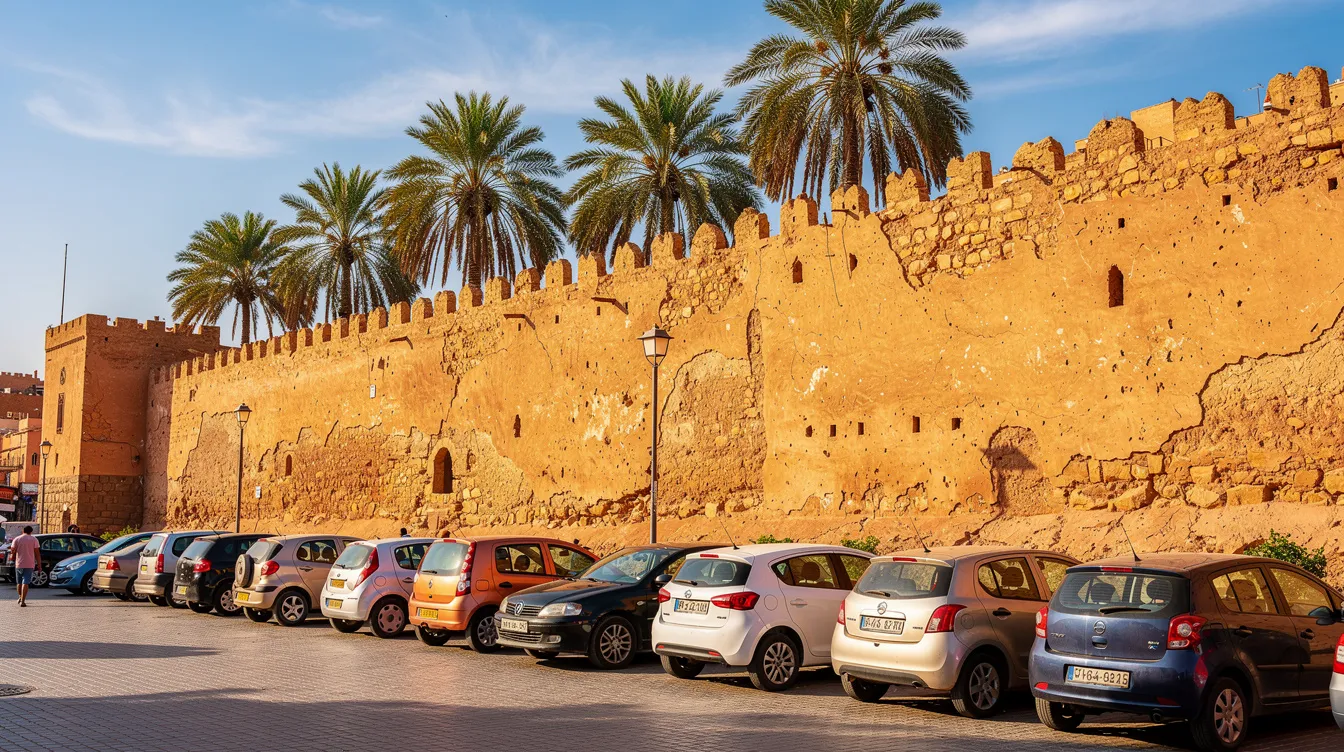
Medinas: park outside the walls
Medinas, the historic old towns, often have narrow lanes and pedestrian-only or restricted access that is poorly suited to cars. Avoid driving into the medina to look for a space: in cities such as Marrakech, Fes, Meknes or Chefchaouen, the simplest option is usually to leave the car in a car park outside the gates or on the edge of the old town and continue on foot.
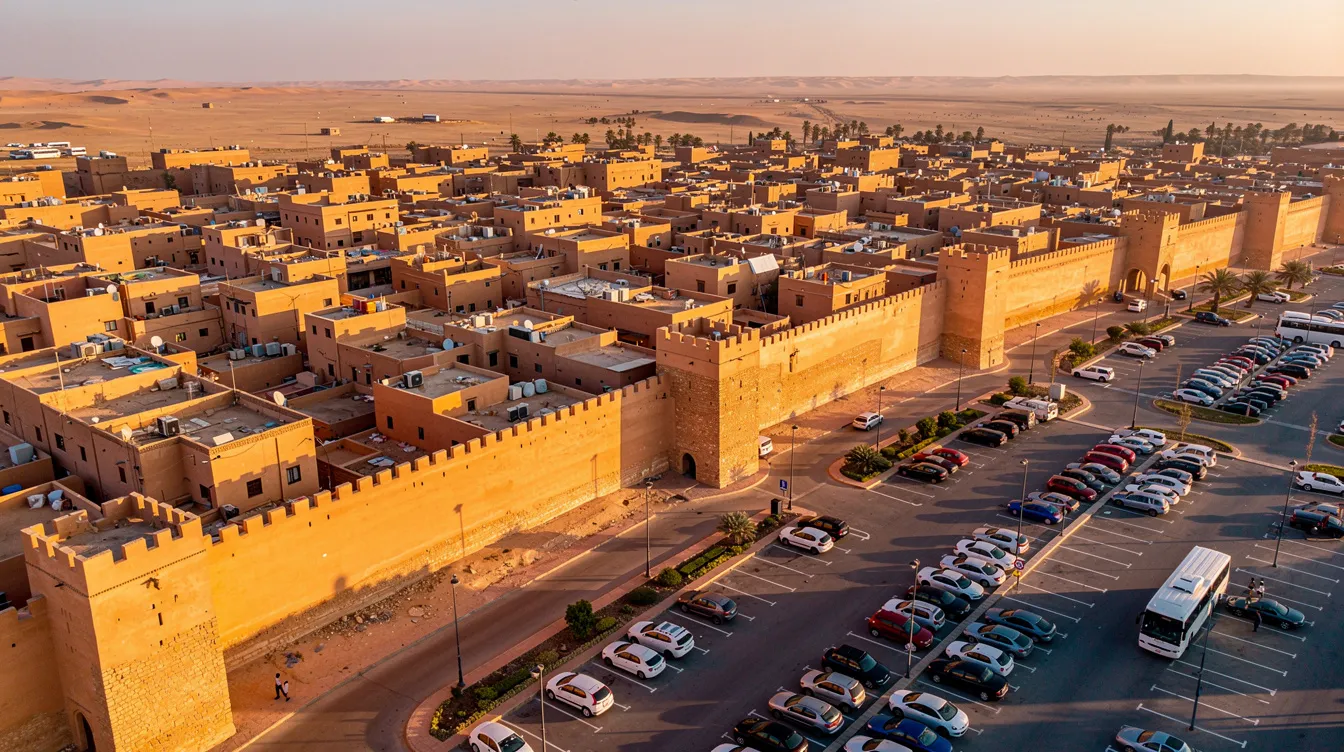
Parking spaces and open lots, sometimes guarded, are often found near the medina gates. Locations, opening hours and rates change: confirm on the spot, ask your accommodation or read recent reviews from other travellers before relying on a specific car park.
Parking near riads
Many riads are inside or on the edge of the medina and have no parking of their own. Before you arrive:
- Ask the riad which car park it recommends (the name of the nearest square, street or guarded car park) and how to reach it on foot with luggage.
- Check whether the car park is guarded overnight or only at certain times.
- Ask whether the riad works with a car park or can point you to a trusted attendant.
Asking your accommodation about safe parking is the most useful step: the riad's reception or manager knows the area and can save you trouble.
Guarded car parks in cities
Larger cities have public or private car parks, fenced or underground, often with an attendant. For long or overnight stays they are generally the most cautious choice. Always ask the attendant until what time the car park is supervised, how to pay and what happens if you collect the car outside opening hours.
Streets and boulevards
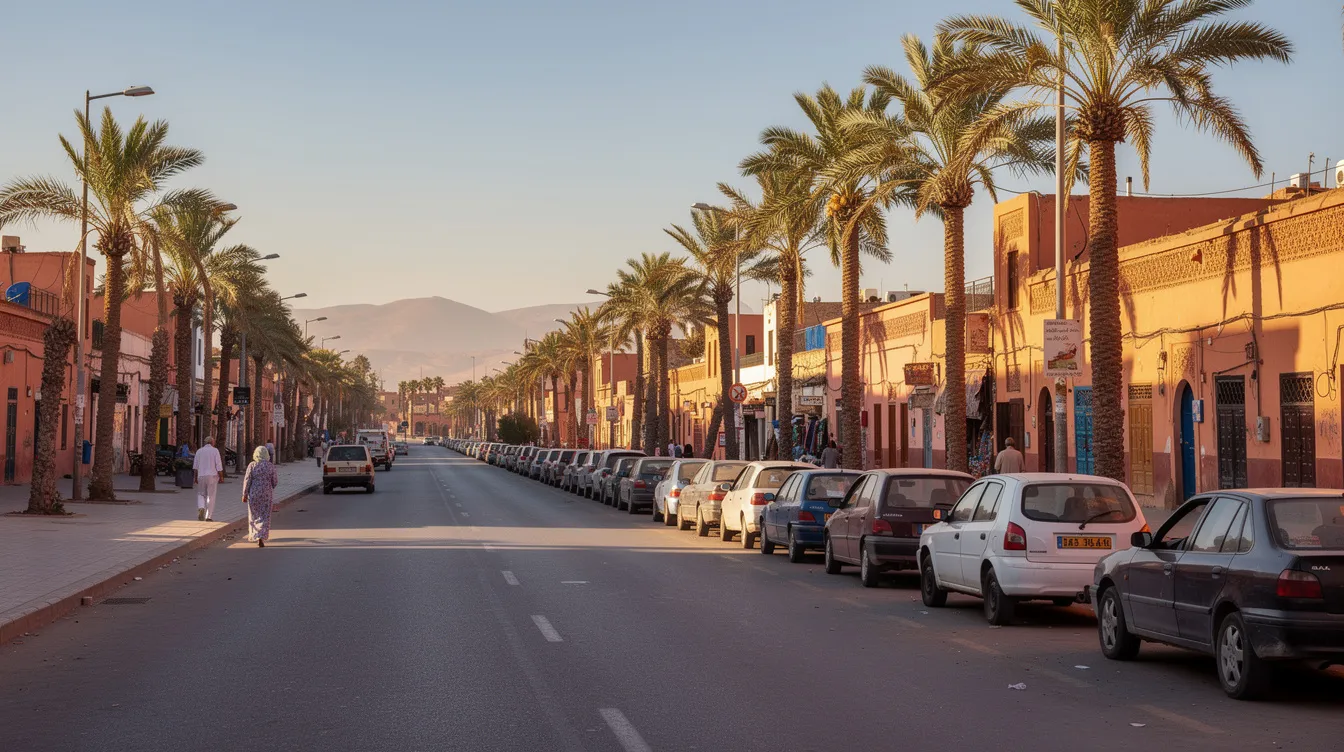
On many city streets you park at the kerb; signs and road markings may indicate regulated, paid or prohibited parking. An attendant in a high-visibility vest is often present. Many travel guides report that kerbs painted red and white mean no stopping or parking: always respect no-parking signs and kerb markings and, if in doubt, ask an attendant or your accommodation, because illegal parking can lead to a fine or the car being towed.
If the area is crowded or poorly lit, it is wiser to choose a guarded car park than a side street.
Hotels, resorts and apartments
Many properties, especially in modern districts or on the coast, offer guest parking, but it is not guaranteed.
- When booking your accommodation, check whether parking is included, whether it is on-site or on the street, and whether it is supervised.
- Ask reception where it is safest to leave a rental car overnight.
- If the hotel has no parking, ask which nearby garage or guarded car park it recommends.
Beaches, excursions and the desert
Whether you visit the beaches around Agadir, Essaouira or Al Hoceima, a waterfall or an Atlas viewpoint, or set off on an adventure towards the Sahara and Merzouga, the approach is the same:
- Choose busy areas with other cars and, if possible, kiosks, restaurants or an attendant.
- Avoid leaving the car isolated for many hours, especially at sunset or at night.
- For a long trek or desert excursion, ask your accommodation or guide where to leave the car in a busy spot in the nearest village.
Dealing with informal parking attendants
In many cities you will find people who look after a stretch of street or a car park, often wearing a high-visibility vest; they help with manoeuvring and keep an eye on the cars.
- Stay friendly. Ask beforehand how much is expected for the service: the amount varies by area and time and is not given in this guide.
- Ask until what time they stay: that is the difference between a supervised and an unsupervised car.
- Never hand your keys, documents or valuables to the attendant.
Shopping centres and modern districts
Underground and multi-storey garages are often found in modern districts and shopping centres, handy for shopping or business meetings. In large cities it is generally better to park in modern, well-lit areas. Check the closing time and payment method at the entrance so the car is not locked in for the night.
Apps and maps to find parking
Use a maps app to find car parks near your accommodation or the places you want to visit: search for "parking", view the options in the area and save the most convenient ones on the map for your itinerary. A few minutes of preparation saves a lot of driving around in city-centre traffic. Availability shown in apps is not always up to date, so keep a plan B nearby and check recent reviews to see whether a car park is really open.
Rental contract and protecting your parked car: a practical checklist
This is the hands-on part: what to do to reduce the risk of damage, theft and parking fines when you rent a car in Morocco.
What to check in the agency's contract
Each agency may have different terms for theft, vandalism and damage that happens while parked. Before signing, read the clauses on:
- Cover for theft (of the car or of parts such as wheels, mirrors or windows) and break-ins while the car is parked.
- The excess, i.e. the part of the damage you pay yourself. For more, read the guide on the rental car deposit in Morocco.
- Any obligation to report to the authorities and deadlines for notifying the agency of damage or theft.
- Exclusions: tyres, wheels, glass, mirrors or the underbody may not be covered by basic insurance. Ask for written confirmation of what is included.
Before collecting the car, do a detailed check using the guide rental car inspection in Morocco.
"Ask the agency" table
| Topic | Question to ask | Answer |
|---|---|---|
| Parking damage | Are scratches and dents that happen while parked covered by my option? | Ask agency |
| Exclusions | Do glass, mirrors, wheels and underbody need extra cover? | Ask agency |
| Theft | Is theft of the car or its contents covered? Is a police report required? | Ask agency |
| Deposit | How is it held and when is it released if there is damage? | Ask agency |
| Overnight parking | Are there rules on where to leave the car at night? | Ask agency |
| Damage procedure | If I find a new scratch after parking, whom do I contact and how? | Ask agency |
Protecting your parked car
- Before locking the car, check you have your keys, personal documents, phone and valuables.
- Leave nothing on display: bags, backpacks, cameras, laptops or suitcases on the seat attract unwanted attention.
- Whenever possible, park in well-lit, busy areas.
- Close windows and lock doors even for short breaks at a petrol station or cash machine: it only takes a few seconds for something to disappear.
- If you park overnight away from your hotel, photograph the spot (street, sign, junction) so you can find the car and have proof of its location.
Documents and keys
- Keep your driving licence and the vehicle documents provided by the agency accessible but secure, as they may be needed at a roadside check.
- Save a digital copy of the contract and the agency's contact details on your phone.
- Do not leave the original contract or a spare key inside the car.
- If your hotel has a safe, use it for documents you do not need while driving.
Photos and evidence for parking damage
- Photograph the car from every side at collection, including bumpers, wheels and interior.
- If you notice a new scratch after parking, photograph it immediately and note the place and time.
- Contact the agency following the contract procedure; for more serious cases, read the guide on rental car breakdown or accident in Morocco.
Parking fines
Illegal parking can lead to a fine or the car being towed. Respect no-stopping and no-parking rules, reserved spaces (taxis, buses, residents) and any signs with time or traffic restrictions. Who pays and how fines are handled depends on the contract: read the guide on traffic fines with a rental car in Morocco.
Quick checklist before parking
- ✅ Well-lit, busy and, if possible, guarded area
- ✅ Nothing visible inside the car
- ✅ Doors locked, central locking on and windows closed
- ✅ Photo of the parked car and the nearest landmark
- ✅ Closing time or end of supervision checked
Frequently asked questions about parking a rental car in Morocco
Is it safe to leave a rental car near the medina?
It depends on the area, whether there is supervision and whether you leave anything on display. Prefer guarded, well-lit car parks and ask your accommodation for advice.
Can I drive into the medina with a rental car?
In many medinas the lanes are narrow and access is restricted. Follow the signs, ask your riad or hotel for directions and, if in doubt, leave the car on the edge of the old town.
What should I do if I find a new scratch after parking?
Photograph the damage, note the place and time and contact the agency straight away using the details in your contract, without waiting until you return the car.
Does the rental cover theft or damage while the car is parked?
It depends on the cover and insurance offered by the agency and the excess. Check the written terms before booking and signing the contract.
How much does parking or an attendant cost?
There is no single amount: it varies by city, area and time. Ask before leaving the car and keep any receipt.
Should I leave my keys or documents with the attendant?
No. Never hand keys, vehicle documents, your passport or the contract to third parties.
How do I plan parking along a road trip?
Start with the guide Planning a Morocco Road Trip in 2027: A Car Rental Checklist and mark on a map, for each stop, a main car park and a backup near your accommodation and the places you want to visit.
In short
Parking a rental car in Morocco is not complicated, but it takes a little more care than a trip in Europe: guarded car parks at night, nothing on display, photos as evidence and a carefully read contract. RentalMe helps travellers find and compare professional rental agencies; until bookings are live, you can join the RentalMe customer waitlist and compare agencies' written terms.